Schema Markup vs. JSON-LD: Which One Does AI Prefer?
A technical deep dive into why JSON-LD is the gold standard for Google and AI scrapers
As AI-powered search engines like ChatGPT, Perplexity, and Google's Search Generative Experience (SGE) become the primary way users find information, the format of your structured data matters more than ever. While multiple schema markup formats exist—microdata, RDFa, and JSON-LD—only one has emerged as the clear favorite for AI systems. Let's explore why JSON-LD is winning the race.
Ready to optimize your content?
Generate optimized JSON-LD schemas to protect your traffic and optimize for AI search engines.
Get Started FreeNo Credit Card Required
The Three Main Schema Markup Formats
Before diving into AI preferences, it's essential to understand the three primary ways to add structured data to your website:
1. Microdata
Microdata embeds structured data directly into HTML elements using attributes like itemscope,itemtype, and itemprop. While it works, it mixes content with metadata, making HTML harder to maintain and parse.
2. RDFa
RDFa (Resource Description Framework in Attributes) is similar to microdata but uses different attributes like vocaband typeof. It's more flexible but also more complex, requiring inline markup that clutters your HTML.
3. JSON-LD
JSON-LD (JavaScript Object Notation for Linked Data) is a script-based format that lives in a <script type="application/ld+json"> tag, typically in the <head> section. It's completely separate from your HTML markup, keeping your code clean and maintainable.
Why AI Systems Prefer JSON-LD
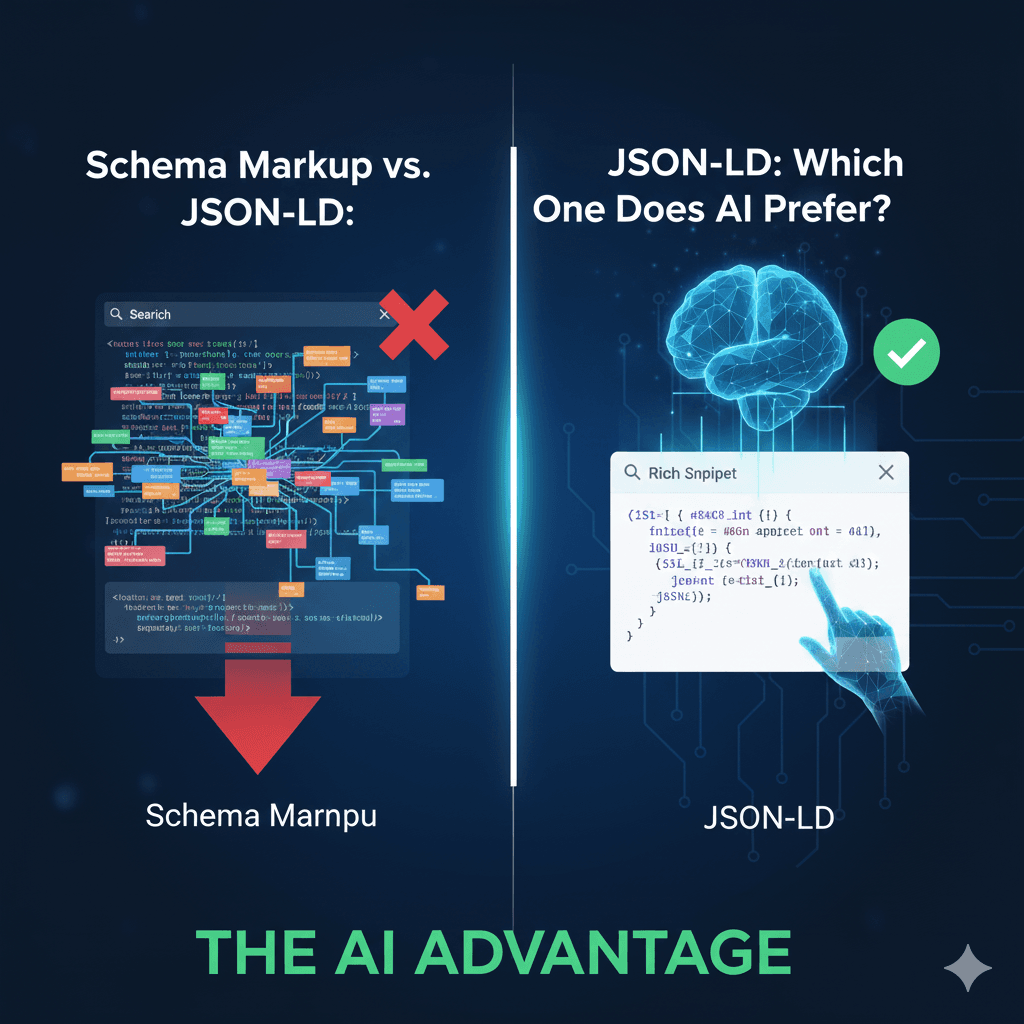
Clean Separation of Concerns
AI scrapers and crawlers need to parse structured data quickly and efficiently. JSON-LD's separation from HTML means AI systems can extract all structured data in a single pass without parsing complex HTML attributes. This efficiency is crucial when processing millions of pages.
Native JSON Format
Modern AI systems are built to work with JSON. JSON-LD is already in the format these systems expect, requiring no additional parsing or transformation. This native compatibility means faster processing and fewer errors.
Google's Official Recommendation
Google explicitly recommends JSON-LD as the preferred format for structured data. Since Google's algorithms power many AI search experiences, following their recommendation ensures maximum compatibility with AI-powered search engines.
Easier to Maintain and Update
JSON-LD can be dynamically generated and updated without touching your HTML. This is especially valuable for content management systems, e-commerce platforms, and sites with frequently changing data like prices, availability, or ratings.
Real-World AI Performance
When AI systems like ChatGPT or Perplexity scrape your content, they prioritize structured data that's easy to extract and understand. JSON-LD's clean structure means:
- Faster parsing and indexing
- More accurate entity recognition
- Better context understanding
- Higher likelihood of being cited as a source
The Bottom Line
While microdata and RDFa still work for traditional search engines, JSON-LD is the clear winner for AI-powered search. Its clean structure, native JSON format, and Google's endorsement make it the gold standard for modern SEO. If you're optimizing for AI search engines, JSON-LD isn't just recommended—it's essential.
Ready to optimize your content?
Generate optimized JSON-LD schemas to protect your traffic and optimize for AI search engines.
Get Started FreeNo Credit Card Required