What is LLMO? Why Traditional SEO Isn't Enough in 2026
The shift from ranking for keywords to being the source of truth for AI agents
If you're still optimizing solely for traditional search rankings, you're missing a massive opportunity. The rise of AI-powered search engines has given birth to a new discipline: LLMO (Large Language Model Optimization). This isn't just another SEO acronym—it represents a fundamental shift in how content is discovered, understood, and cited by AI systems.
Ready to optimize your content?
Generate optimized JSON-LD schemas to protect your traffic and optimize for AI search engines.
Get Started FreeNo Credit Card Required
What is LLMO?
Large Language Model Optimization (LLMO) is the practice of optimizing your content to be the preferred source for AI-powered search engines and language models like ChatGPT, Perplexity, Claude, and Google's Search Generative Experience (SGE). Unlike traditional SEO, which focuses on ranking for keywords, LLMO focuses on becoming the authoritative source that AI systems cite and reference.
The Key Difference: Keywords vs. Authority
Traditional SEO asks: "How do I rank #1 for 'best running shoes'?" LLMO asks: "How do I become the source of truth that AI systems reference when users ask about running shoes?" This fundamental shift changes everything about how you structure and present your content.
Why Traditional SEO Falls Short
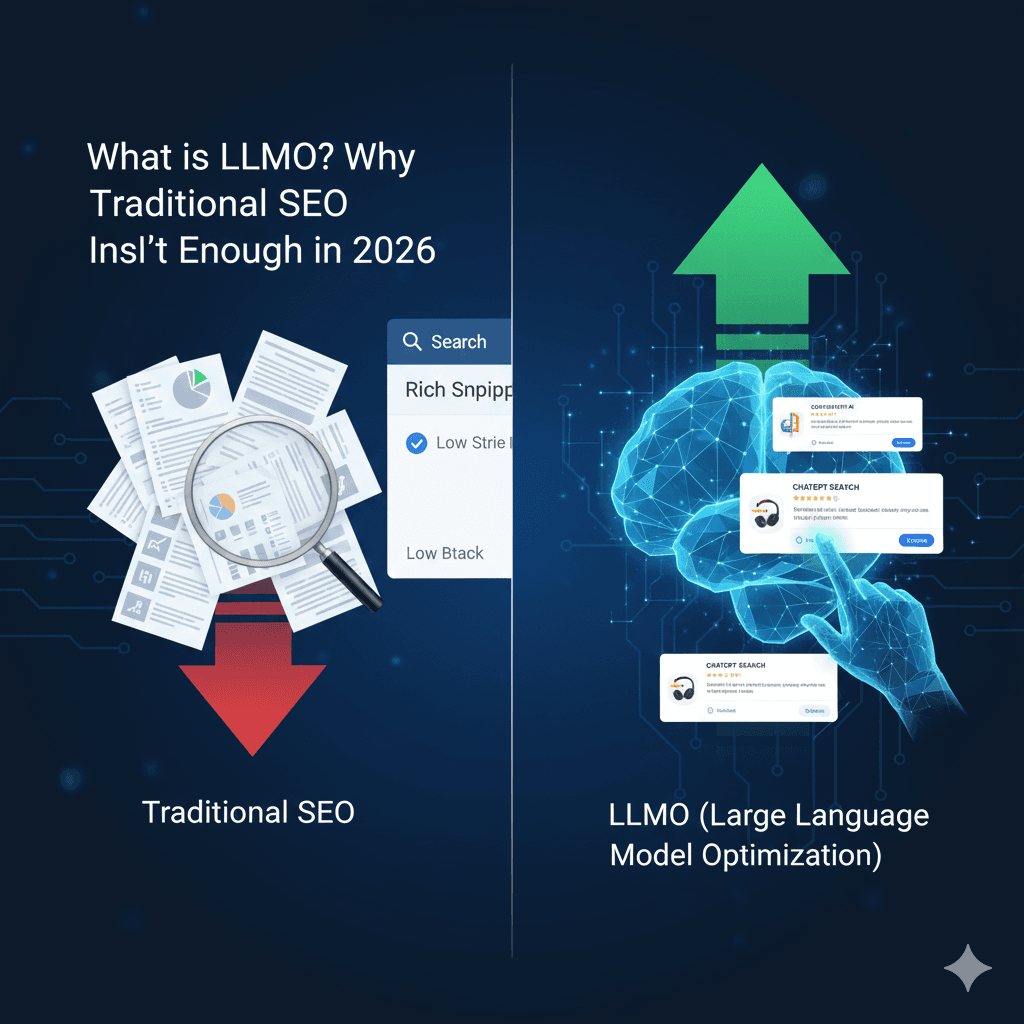
Traditional SEO strategies were designed for a world where:
- Users clicked through to websites to find answers
- Ranking position determined visibility
- Keyword density and backlinks were the primary signals
- Search results were static lists of links
In 2026, AI search engines work differently. They:
- Synthesize information from multiple sources
- Provide direct answers without requiring clicks
- Prioritize authoritative, well-structured content
- Use semantic understanding over keyword matching
The Pillars of LLMO
1. Structured Data Excellence
AI systems rely heavily on structured data (JSON-LD) to understand your content. Without proper schema markup, AI can't accurately categorize, cite, or reference your content. This is why JSON-LD implementation is the foundation of LLMO.
2. Semantic Entity Mapping
LLMO requires connecting your content to the broader knowledge graph through entities. This means identifying people, places, organizations, and concepts in your content and linking them to authoritative sources like Wikidata. This helps AI systems understand context and relationships.
3. Authority Signals
AI systems prioritize content from authoritative sources. This means showcasing credentials, expertise, citations, and trust signals through structured data. Your content needs to clearly communicate why it's the source to trust.
4. Comprehensive Coverage
AI systems prefer sources that provide complete, comprehensive information. Instead of thin content optimized for specific keywords, LLMO requires in-depth, authoritative content that thoroughly covers topics.
The LLMO Advantage
When you optimize for LLMO, you're not just competing for rankings—you're competing to be the source of truth. This means:
- Higher citation rates in AI-generated responses
- Brand visibility even in zero-click search results
- Authority recognition across multiple AI platforms
- Future-proofing your SEO strategy as AI search continues to grow
Getting Started with LLMO
Transitioning to LLMO doesn't mean abandoning traditional SEO—it means enhancing it. Start by:
- Implementing comprehensive JSON-LD schemas on all your content
- Mapping entities in your content to the knowledge graph
- Building authority signals through structured data
- Creating comprehensive, authoritative content that serves as the definitive source
- Monitoring how AI systems cite and reference your content
The Future is LLMO
As AI-powered search becomes the norm, LLMO isn't optional—it's essential. Traditional SEO will always have value, but the brands that thrive in 2026 and beyond will be those that optimize for both human searchers and AI agents. The question isn't whether to adopt LLMO, but how quickly you can implement it.
Ready to optimize your content?
Generate optimized JSON-LD schemas to protect your traffic and optimize for AI search engines.
Get Started FreeNo Credit Card Required